

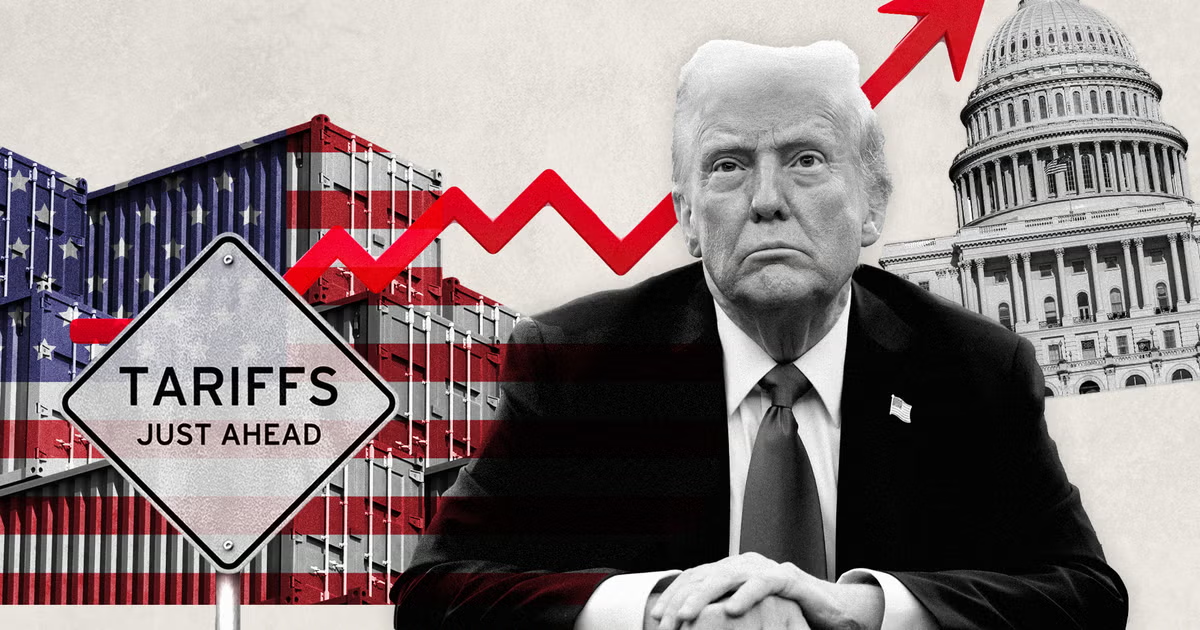
When Donald Trump launched his fiery trade war under the slogan “America First,” he framed it as a necessary correction to decades of “unfair” global trade practices. But as the dust settled, it became clear: Trump’s tariffs didn’t just shake China — they boomeranged back on the U.S., leaving a trail of economic damage, global friction, and lost trust.
The aggressive tariffs — mostly targeting Chinese goods — sparked a retaliation spiral, disrupting global trade and rattling supply chains. China didn’t back down; it fought back. Meanwhile, American farmers, automakers, and retailers bore the brunt of rising costs and lost market access.
Ironically, while Trump intended to weaken China, he ended up pushing Beijing into stronger partnerships with countries like Russia, Iran — and even accelerated efforts with BRICS nations, including India.
India’s Strategic Rise Amid U.S. Turmoil
As the U.S. locked horns with China, India saw a strategic window. With American tariffs destabilizing old trade routes and global investors seeking alternatives to Chinese manufacturing, India positioned itself as a rising manufacturing and supply chain hub. Initiatives like “Make in India” gained traction, and global tech giants began rerouting production to Indian soil.
Yet, India didn’t fall in line with Trump’s aggressive policies. Despite U.S. pressure, India continued importing oil from sanctioned countries like Iran and Russia — citing national interest and energy security. New Delhi’s posture made one thing clear: India would not dance to America’s tune, especially under Trump’s unpredictable and often confrontational diplomacy.
Trump’s administration tried using tariffs as leverage against India too — ending GSP (Generalized System of Preferences) benefits and targeting India’s exports. But the move backfired. India diversified its partners, strengthened ties with the EU and ASEAN, and deepened its self-reliance goals.
Global Damage, Domestic Fallout
Trump’s tariff war cost American consumers more than $50 billion in additional costs, while studies showed minimal job growth in the industries it was supposed to protect. U.S. businesses faced uncertainty, and China — far from being crippled — accelerated its pivot toward Africa, Latin America, and the Global South.
Global economies suffered, but it was Trump’s America that found itself isolated and economically bruised. A former White House official bluntly admitted, “There was no grand plan. It was policy by press conference.”
Today, countries like India have emerged stronger and more autonomous, while the U.S. is still grappling with inflation, broken trade alliances, and supply chain gaps — many seeded by Trump’s tariff tantrums.


2 thoughts on “🇺🇸 World feels the heat as Trump’s tariffs boomerang on the U.S.”